Ever looked up and felt inspired to sketch the fluffy shapes above? Cloud drawing isn’t just child’s play—it’s a powerful blend of art, science, and mindfulness. Let’s dive into the sky-high world of capturing clouds on paper and digital canvas.
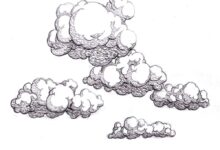
What Is Cloud Drawing and Why It Matters

Cloud drawing is the artistic practice of observing and illustrating clouds in various forms, whether through traditional sketching, painting, or digital illustration. It’s more than just doodling cumulus puffs—it’s a way to connect with nature, improve observational skills, and express creativity grounded in real-world phenomena.
The Artistic Definition of Cloud Drawing
At its core, cloud drawing is a form of representational art that focuses on the visual interpretation of atmospheric formations. Artists use pencils, watercolors, or digital tools to capture the ever-changing shapes, textures, and lighting of clouds. Unlike abstract art, cloud drawing often emphasizes realism, though stylized interpretations are also common.
- It involves careful observation of light and shadow.
- Artists often study cloud types before drawing.
- Drawing from life (en plein air) enhances authenticity.
“Clouds are nature’s brushstrokes in the sky,” says renowned landscape artist Thomas Kinkade.
Scientific Roots Behind Cloud Drawing
Cloud drawing has deep ties to meteorology and environmental science. In the 19th century, Luke Howard, a British chemist and amateur meteorologist, classified clouds into categories like cumulus, stratus, and cirrus—terminology still used today. Artists and scientists alike began sketching clouds to document weather patterns, making cloud drawing a bridge between art and science.
Modern educational programs, such as those by the GLOBE Program, encourage students to practice cloud drawing to contribute to climate research. These sketches help track cloud cover and types, feeding into global atmospheric models.
Types of Clouds and How to Draw Them
Understanding cloud classification is essential for accurate and expressive cloud drawing. Each cloud type has unique visual characteristics that influence how you render them on paper or screen.
Cumulus: The Fluffy Giants
Cumulus clouds are the classic “cotton ball” clouds, often seen on sunny days. They have a puffy, three-dimensional appearance with sharp edges and bright highlights.
- Use soft shading to show volume.
- Leave white spaces for sunlight reflection.
- Draw uneven bases to suggest depth.
When doing cloud drawing of cumulus formations, focus on contrast. The top is usually bright white, while the underside is shaded gray, indicating shadow and depth. A light blue pencil or wash can suggest the sky peeking through gaps.
Stratus: The Blanket Clouds
Stratus clouds form flat, featureless layers that cover the sky like a gray blanket. They often bring overcast conditions and light drizzle.
- Use smooth, even tones for a uniform look.
- Avoid harsh lines; blend gently with a stump or brush.
- Add subtle texture with a dry brush technique.
In cloud drawing, stratus clouds challenge artists to convey mood. Their monotonous appearance can feel dull, but skilled artists use minimalism and tonal variation to evoke atmosphere and emotion.
Cirrus: The High-Flying Feathers
Cirrus clouds are thin, wispy, and found at high altitudes. Made of ice crystals, they often signal weather changes.
- Use fine lines and delicate strokes.
- Draw with a sharp pencil or fine-tip pen.
- Incorporate slight curves to mimic wind flow.
For cloud drawing of cirrus clouds, precision is key. These formations are fragile and translucent, so avoid heavy shading. A light touch and strategic erasing can create the illusion of transparency and movement.
Essential Tools for Cloud Drawing
Whether you’re a beginner or a seasoned artist, having the right tools can elevate your cloud drawing experience. From traditional mediums to digital platforms, each offers unique advantages.
Traditional Art Supplies
Many artists prefer the tactile feel of physical materials when engaging in cloud drawing. These tools allow for direct interaction with the medium and often produce organic, expressive results.
- Pencils: Use a range from 2H (light lines) to 6B (dark shading).
- Eraser: A kneaded eraser helps lift graphite for cloud highlights.
- Paper: Choose textured paper for better graphite grip and depth.
- Blending tools: Tortillons or cotton swabs smooth gradients.
Watercolor is another popular choice for cloud drawing. A wet-on-wet technique can mimic the soft edges of clouds, while dry brushing adds texture. Artists like J.M.W. Turner mastered this method to create ethereal skies.
Digital Tools and Software
Digital cloud drawing has surged in popularity with the rise of tablets and illustration apps. These tools offer undo functions, layers, and infinite color palettes.
- Tablets: iPad with Apple Pencil or Wacom devices are top choices.
- Software: Procreate, Adobe Photoshop, and Corel Painter are ideal for cloud drawing.
- Brushes: Use soft airbrushes and texture brushes for realism.
One major advantage of digital cloud drawing is the ability to simulate lighting changes instantly. You can adjust the time of day, sun angle, and cloud density with sliders, making it easier to study how light interacts with clouds.
“Digital tools let me experiment without fear of mistakes,” says digital artist Lena Chen. “I can try ten versions of a cloud in the time it takes to sketch one by hand.”
Step-by-Step Guide to Cloud Drawing
Creating a realistic cloud drawing doesn’t have to be intimidating. Follow this structured approach to build confidence and skill.
Step 1: Observe and Sketch the Outline
Begin by studying the sky. Don’t rush to draw—spend 5–10 minutes observing cloud shapes, edges, and movement. Note how they interact with light.
- Squint your eyes to see major light and dark areas.
- Sketch a light outline with a 2H pencil.
- Focus on the overall shape, not details.
Use reference photos if drawing indoors. Websites like Unsplash offer high-resolution cloud images for practice.
Step 2: Build Volume with Shading
Clouds are three-dimensional. To show depth, identify the light source (usually the sun) and shade accordingly.
- Leave the top and sides facing the sun white or lightly shaded.
- Darken the underside and areas between cloud masses.
- Use gradual transitions, not hard lines.
Layer your shading slowly. Start light and build up darkness. This prevents muddiness and allows for corrections.
Step 3: Refine and Add Atmosphere
The final stage brings your cloud drawing to life. This is where you enhance realism and mood.
- Use an eraser to lift highlights on cloud tops.
- Add faint lines to suggest wind direction.
- Blend the sky around the cloud for a seamless background.
Consider the time of day. Morning clouds have soft, cool tones, while sunset clouds glow with oranges and pinks. Adjust your palette accordingly.
Cloud Drawing in Education and Science
Cloud drawing isn’t just for artists—it’s a valuable tool in education and environmental science. Schools and research programs use it to teach observation, classification, and climate awareness.
Teaching Meteorology Through Art
Many science curricula integrate cloud drawing to help students understand weather systems. By sketching clouds, students learn to identify types and correlate them with weather conditions.
- Cumulonimbus = thunderstorms.
- Altostratus = approaching rain.
- Cirrostratus = possible snow or rain in 24 hours.
The GLOBE Cloud Protocol trains students to make cloud drawings and submit them to NASA scientists. These real-world contributions help validate satellite data.
Therapeutic and Cognitive Benefits
Cloud drawing also supports mental well-being. The act of observing and sketching clouds is a form of mindfulness, reducing stress and improving focus.
- Encourages present-moment awareness.
- Boosts creativity and problem-solving.
- Helps children with sensory processing.
Art therapists use cloud drawing exercises to help clients express emotions indirectly. The open-ended nature of clouds allows for symbolic interpretation—what one person sees as a sheep, another might see as a dragon.
“Cloud drawing gives patients a safe space to project feelings without pressure,” explains Dr. Elena Martinez, a licensed art therapist.
Famous Artists Known for Cloud Drawing
Throughout history, artists have used cloud drawing to enhance landscapes, convey emotion, and explore atmospheric effects. Their work continues to inspire modern creators.
J.M.W. Turner: Master of Light and Sky
Joseph Mallord William Turner, a 19th-century British painter, was obsessed with skies. His cloud drawings and paintings captured the drama of light, weather, and industrial change.
- Used watercolor and oil to depict stormy and serene skies.
- Studied cloud formations scientifically.
- Influenced Impressionists with his loose, expressive skies.
Turner’s sketches, now housed in the Tate Britain, show meticulous attention to cloud types and lighting. His work proves that cloud drawing can be both artistic and analytical.
John Constable: The Sky as Subject
John Constable, another English landscape painter, believed “the sky is the source of light in nature and governs everything.” He made hundreds of cloud drawings during his career.
- Drew en plein air, often in Hampstead Heath.
- Noted weather conditions and time on the back of sketches.
- Used a grid system to study cloud movement.
Constable’s cloud studies were so accurate that modern meteorologists have used them to reconstruct historical weather patterns.
Cloud Drawing Challenges and How to Overcome Them
Even experienced artists face hurdles when attempting realistic cloud drawing. Understanding common issues and solutions can accelerate your progress.
Problem: Clouds Look Flat
One of the most frequent complaints in cloud drawing is that clouds appear two-dimensional. This happens when shading lacks contrast and depth.
- Solution: Increase the value range—use very light and very dark tones.
- Solution: Study reference photos with strong lighting.
- Solution: Use a directional light source consistently.
Remember, clouds are not flat sheets—they have volume. Think of them as floating masses with tops, sides, and undersides.
Problem: Overblending and Muddy Tones
Overblending can erase contrast and make clouds look like smudged paper. This is especially common with soft pencils or digital smudge tools.
- Solution: Blend selectively—only in transition zones.
- Solution: Use a lighter touch and build layers gradually.
- Solution: Switch to a harder pencil (e.g., HB) for mid-tones.
In digital cloud drawing, use low-opacity brushes and avoid overusing the smudge tool. Instead, layer colors softly to maintain clarity.
Problem: Losing the Sky Background
Beginners often focus so much on the cloud that the sky becomes an afterthought. But the sky is part of the composition.
- Solution: Lightly shade the sky with a blue-gray tone.
- Solution: Use a gradient from top (darker) to horizon (lighter).
- Solution: Leave subtle texture to avoid a flat look.
The sky should support the cloud, not compete with it. A well-rendered sky enhances the cloud’s form and realism.
Modern Trends in Cloud Drawing
Cloud drawing has evolved with technology and culture. Today’s artists blend tradition with innovation, creating new styles and applications.
Digital Cloud Art and NFTs
With the rise of digital art and NFTs, cloud drawing has entered the blockchain world. Artists sell limited-edition cloud illustrations as digital collectibles.
- Some NFTs feature animated clouds with changing weather.
- Others use AI to generate evolving cloud patterns.
- Marketplaces like OpenSea host cloud-themed digital art.
These modern interpretations push the boundaries of what cloud drawing can be—no longer static, but dynamic and interactive.
Cloud Drawing in Mindfulness Apps
Mobile apps now incorporate cloud drawing as a relaxation tool. Users can sketch clouds in real-time while listening to calming music or guided meditations.
- Apps like SkySketch and CloudMeditate offer drawing prompts.
- Some use AR to overlay drawings on live sky views.
- Progress is saved as a digital journal.
These tools make cloud drawing accessible to non-artists, promoting mental wellness through creative expression.
What is the easiest cloud type to draw for beginners?
Cumulus clouds are the easiest for beginners because of their distinct, puffy shapes and clear light/shadow contrast. They provide a great introduction to volume and form in cloud drawing.
Do I need to know meteorology to do cloud drawing?
No, but understanding basic cloud types (cumulus, stratus, cirrus) can improve accuracy and depth in your drawings. It’s helpful but not required.
Can I use a photo reference for cloud drawing?
Absolutely. Photo references from sites like Flickr Cloud Group are excellent for practice, especially when the sky is overcast.
What paper is best for cloud drawing?
Medium-textured drawing paper (90–140 lb) works best. It holds graphite well and allows for blending without tearing.
How can I make my clouds look 3D?
Use strong value contrast, define light and shadow clearly, and avoid outlining clouds with hard lines. Focus on soft transitions and volume.
Cloud drawing is more than just sketching what’s above—it’s a fusion of art, science, and mindfulness. From the fluffy cumulus to the wispy cirrus, each cloud tells a story of atmosphere and light. Whether you’re using a pencil or a tablet, the sky is not the limit—it’s your canvas. By mastering techniques, learning from the masters, and embracing modern tools, you can turn simple cloud drawing into a powerful creative practice. So next time you look up, don’t just see clouds—see possibilities.
Further Reading:
